Rocky Mountain National Park Sights

Rocky Mountain National Park

Welcome to the Rocky Mountain National Park Sights Page
It is our intent to provide information that will be timely and of assistance in planning a trip, vacation or obtaining data about this park

-SPONSORED LINKS-
Rocky Mountain National Park Lodging
Rocky Mountain National Park Hotels
Rocky Mountain National Park Maps
Rocky Mountain National Park Camping
Colorado Weather
Rocky Mountain National Park Tours
Rocky Mountain National Park Pictures
Rocky Mountain National Park Vacation
Moose

Sponsored National Park Search

Rocky Mountain National Park Sights To See

  • Aspen
  • General Information
  • Road Tours
  • Rocky in a Day
  • Rocky in a Week
  • Seasons
  • Snowmobiling
  • Wapiti
  • Winter Wildlife
  • Wildlife Viewing

  • 
    

    General Information

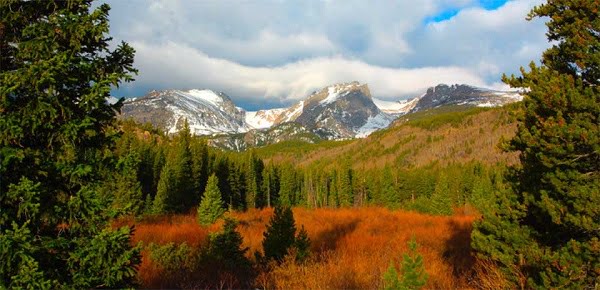
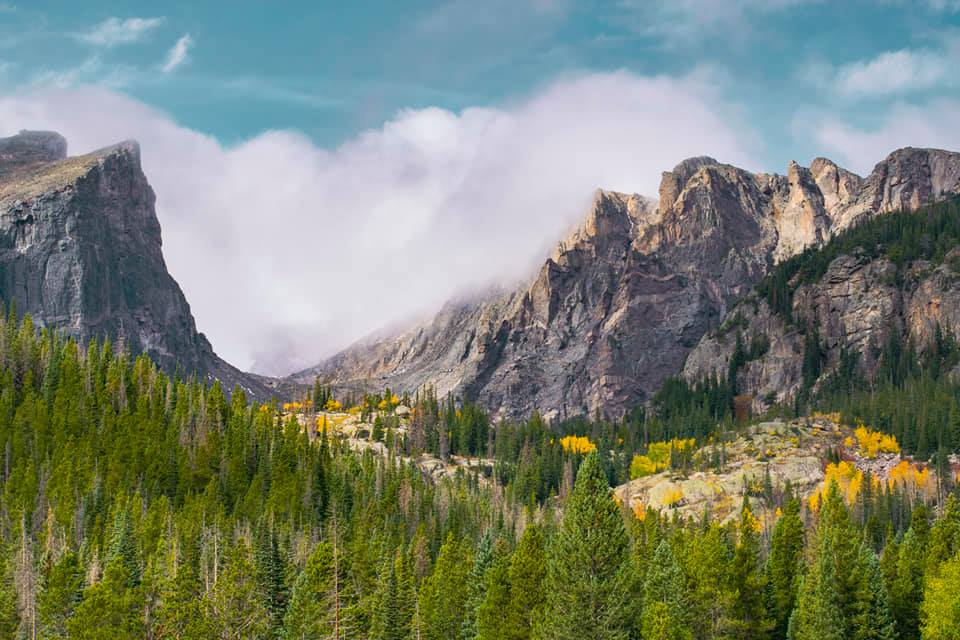
    Trail Ridge Road crosses the Continental Divide and looks out over dozens of peaks that tower more than 13,000 feet high. Longs Peak, the highest peak in the park, is 14,255 feet in elevation. The high point on Trail Ridge Road is 12,183 feet. The road is closed from late fall, to the Memorial Day weekend.

    Because of the high elevation of the park (8,000 feet to over 14,000 feet) visitors need to take time to acclimatize. People with various medical problems should check with their physician before coming to the park.

    Elk, mule deer, big horn sheep, moose, coyotes and a great variety of smaller animals call the 416 square miles (265,769 acres)of the National Park home. During the winter months snowshoeing and cross country skiing are very popular. Hiking is available on 346 miles of trails. Many trails can be hiked any time of the year.

    June and July are the best months for seeing the wild flowers. Weather conditions determine when and where flowers bloom; call: 970-586-1206 for up to date information. In the fall, viewing the elk rut (mating season) is a wonderful opportunity to see and learn about these magnificent large animals. Almost 90% of the park is managed as wilderness, making it a great place to enjoy solitude and the natural beauty of the Rocky Mountains.

    There are a number of things to do while enjoying Rocky Mountain National Park. These activities include but are not limited to camping, fishing, hiking, horseback riding, mountaineering, photography, ranger activities, stargazing, and winter sports activities.

    For a detailed list of hiking possibilities, fishing and mountaineering regulations see the Hiking Page.


    Rocky in a Week

    When famed Rocky Mountain News editor William Byers visited this region back in 1864, he tried to climb Longs Peak. Byers failed. Nevertheless, he had an exciting time and a memorable experience making it to the summit of nearby Mount Meeker.

    To anyone planning a visit to this stretch of the Rockies, Byers advised a trip of at least eight days. Of course, he traveled by horseback and it took him a couple of days - each way - just to get here from Denver. But a week in this area is definitely worth considering, especially if you're in search of the perfect trip.

    Day 1

    Explore the high country by car. The trip across Trail Ridge Road is punctuated by many pullovers that will introduce you to the region. There's lots to see: scenery, wildlife and wildflowers. A leisurely drive punctuated by lots of stops, short walks and chats with the knowledgeable rangers can make this a very memorable outing. Top off your full day with an evening ranger talk at one of the campgrounds or visitor centers. (Check the park newspaper for programs.)

    Day 2

    Start getting acclimatized by taking a short hike around Bear Lake, Sprague Lake, or one of the many other easy hikes. Ask for other recommendations at a visitor center. Remember to be prepared for an afternoon thundershowers. End the day by joining a Ranger on the Rocky After Dark or Astronomy Program.

    Day 3

    Begin your morning with a ranger-led birdwatching expedition. (Check the park newspaper for programs.) You do not have to be an avid birdwatcher to enjoy an introduction to this informative, interesting activity. In only an hour or two, you can learn a lot about the park and its wild inhabitants. Spend the rest of the day driving the historical Old Fall River Road (one-way uphill) toward Fall River Pass, pausing for a picnic along the way.

    Day 4

    Do what the locals do. Hike the backcountry. Pick a more ambitious walk to a location suited to your hiking ability. Ask for recommendations at a visitor center. But plan to spend the whole day outdoors. Figure on an afternoon rain shower.

    Day 5

    Take a Rocky Mountain Seminar. The non-profit Rocky Mountain Nature Association offers almost 80 day-long and two-day classes on all sorts of natural and cultural history subjects. In a very short time and at a reasonable cost, you can learn a lot from experts about specific subjects ranging from wildflower identification to geology, art and history. (Reservations are required. Call 800-816-7662 for a catalog.)

    Day 6

    Now that you're better acclimated, it's time to try a more rigorous hike. High country lakes are especially popular destinations. Today, you can also apply what you learned from your chats with rangers, the birdwatching trip and your seminar.

    Day 7

    Try something new. If you haven't ever been fly fishing, here's your chance. Perhaps you've never ridden a horse, climbed a mountain or sketched an alpine scene. After you've sampled one or two Rocky Mountain wonders, you'll find there's a lot more to do than you thought. But after this first week, you're off to a great start.


    Rocky in a Day

    Lots of mountains, that's for sure. Whatever else you see depends on what you're looking for.

    A number of park rangers and local residents were asked what they'd suggest if a traveler had only a single day to spend exploring the park. Here's what they said:

    1) Trail Ridge Road is one of America's most spectacular scenic drives. Stopping at various vista points - from Many Parks Curve to the Farview Curve - to soak in the grandeur can make this trip last all day long, two or three hours at the least.

    2) Take a hike. Rocky Mountain National Park is one of the most user-friendly parks in the nation. There are lots of trails and a wide variety of destinations, from lakes and waterfalls to summits, forests and meadows. An hour or two of strolling allows you to sample Rocky's backcountry.

    3) Watch for wildlife. One of the prime reasons this national park was established was to protect the birds and animals. A word of warning: Mind your manners and respect their privacy.

    4) Take pictures. These mountains are perfect subjects for photography. Because wildlife is so abundant and the mountain scenes tend to change hourly with varying light, clouds and shadows, Rocky Mountain National Park is a great place to capture the spectacular Colorado Rockies with a camera.

    5) Visit a museum or historical site. Places like the Moraine Park Museum (filled with natural history exhibits) or the Never Summer Ranch (preserving a historical resort) help us understand what the area was like before the park was formed.

    6) Enjoy a picnic. Many places within the park provide pleasant outdoor settings made better with food, friends and family. Whether it takes place somewhere along the roadway, in one of the dozens of picnic areas or simply on a flat rock out in the woods, a picnic is one of life's little pleasures - easily organized and long remembered.


    Road Tours

    Trail Ridge Road, designated as an "All-American Road" in 1996, is one of the great alpine highways in the United States. It crosses the park from east to west, then drops into the Kawuneeche Valley, where the North Fork of the Colorado River flows.

    The road's winding course takes you 12,183 feet above sea level and into a world akin to Earth's arctic regions. It is usually open from Memorial Day to mid-Oct depending on snowfall. If you are pulling a trailer you will notice reduced power at this high elevation. Take three or four hours for this 50 mile scenic drive, stopping at the overlooks to absorb far-spreading views of Rocky Mountain's peaks and valleys.

    As you travel along Trail Ridge Road, above tree line, you are on this "roof of the Rockies" with superlative vistas of glacier-carved peaks on every side. For a closer look at the alpine world, walk to Forest Canyon Overlook or take half-hour round trip to the Tundra Communities Trail. Remember the alpine tundra ecosystem is extremely fragile; stay on the paths. Also stop at Fall River, 11,796 ft, to visit the Alpine Visitor Center, where exhibits explain the life of the alpine tundra.

    Old Fall River Road, the original road crossing the mountains, runs from Horseshoe Park west to Fall River Pass. West of Endovalley picnic area, it is one-way uphill. The gravel road switchbacks up a narrow mountain valley, giving you an idea of what it was like to travel across the mountains in the early days of the automobile. Because of the sharp switchbacks, pulled trailers are not allowed and max vehicle length is 25 feet. A guide booklet, available at the visitor centers, tells you what to expect.

    Take Bear Lake Road, 10 miles long. This is one of the few paved roads in the Rockies that leads to the heart of a high mountain basin. The area is heavenly used and is often congested. You can expect that parking lots here and at Glacier Gorge Junction will be full between 10:00 am and 3:00 pm on summer days.

    There are no service stations in the park, so make sure to check your gasoline supply. Cars tuned for lower elevations often over heat and vapor lock. If your car acts like it's not getting enough gas, pull off at the nearest pullout, stop your engine and allow it to cool. If snow or cold water is available, put it on your fuel pump and the line leading to the carburetor. Let your car cool for 15 min. before trying to start it again.

    High Altitude Driving

    Driving in the mountains provides many challenges. Steep roadways combined with less oxygen at higher altitudes can place additional demands on any vehicle. By following a few guidelines, you can help your car stay healthy at the park's higher altitudes:

    Use lower gears while traveling downhill. You can slow down your car without wearing down the brakes. If you smell your brakes, pull over, let them cool off and test them before proceeding. Do not drive if the brakes are not working properly.

    If the vehicle is losing power while traveling uphill, use a lower gear to help prevent power loss.

    After stopping, let your car's engine run a minute before turning off the engine.

    Do not use air conditioning. It contributes to power loss.

    If the vehicle is losing power, has a rough-running engine or will not start, it may be experiencing vapor lock. If you suspect your vehicle has vapor lock, let it sit for 30 minutes. Loosen the gas cap and open the hood. If possible, remove the air filter. Try restarting the engine after 30 minutes.

    If your engine dies, try to pull into a turnoff.

    There are no service stations in the park. If you need towing or road service, notify the park by using an emergency phone or getting a message to a ranger station or visitor center. Towing and road service are available from Estes Park or Grand Lake.

    Slower drivers should use the park's pullouts to let other vehicles pass.


    Wildlife Watching

    Rocky Mountain National Park visitors have a passion for viewing wild animals, especially the big ones. With an elk herd numbering more than 3,000, about 800 bighorn sheep, numerous mule deer and a small population of moose calling the park home, it's no surprise that wildlife watching is rated the number-one activity by a vast majority of Rocky's three million annual visitors.

    The park's great large animal population makes it one of the country's top wildlife watching destinations. But there is much more to see than these so called; charismatic megafauna." Also found are nearly 60 other species of mammals; more than 280 recorded bird species; six amphibians, including the federally endangered boreal toad; one reptile (the harmless garter snake); 11 species of fish; and countless insects, including a surprisingly large number of butterflies.

    Some basic knowledge of animal habits and habitats greatly enhances prospects of spotting Rocky Mountain's wild residents. A few park favorites:

    Despite their good intentions, some wildlife watchers are loving park animals to death. Feeding junk food to wildlife reduces its ability to survive the long mountain winter. When they panhandle by roadsides, animals fall easy prey to automobiles. As they become habituated to humans and lose their natural fear, the animals become aggressive and may be destroyed. Harassing or feeding wildlife is illegal in all national parks.

    Tips For Successful, Enjoyable Wildlife Watching

    Watch from a distance. Use binoculars or a telephoto lens to get close-up views.Following larger animals too closely to get a photograph or a better look can stress them and threaten their health. If animals notice you or if they seem nervous, you are too close. Move away quietly.


    Winter Wildlife
    Species Habitat Time of Day
    Bighorn Sheep Open, rocky areas Throughout daytime hours
    Bobcat Rocky areas Day and night
    Coyote Open meadows and wetland edges Day and night
    Elk Open meadows and forest areas Early morning and evening hours
    Gray jay Montane and subalpine forests Throughout daytime hours
    Great horned owl Montane and subalpine forests Night
    Mountain lion Rocky areas Day and night
    Mule deer Montane forest edges, shrub areas, meadows Day and night
    Snowshoe hare Subalpine forests Day and night
    Steller's jay Montane and subalpine forests Throughout daytime hours
    White-tailed ptarmigan Alpine tundra Daytime hours


    Wapiti

    North American elk, or wapiti, were once plentiful in the Rocky Mountain National Park area. As the Estes Valley was settled, elk were hunted extensively, and their habitat was reduced. As a result, the elk population declined and by 1890 few elk remained.

    In 1913 and 1914, before the establishment of the park, 49 elk from Yellowstone National Park were transplanted to this area. Around the same time, an all-out effort began to eliminate predators--including the gray wolf and the grizzly bear. The resulting decrease in predators probably hastened the recovery of Rocky's elk population.

    Currently, the elk population in the park fluctuates dramatically from summer to winter. Concentrations of 3,200 elk in summer may dwindle to 1,000 during winter as elk migrate to lower elevations and move to areas outside the park.

    Accelerating development along the park boundary threatens to diminish open space and traditional migration routes, thus decreasing winter forage and habitat.

    The Mating Season

    As Autumn approaches, elk descend from the high country to montane meadows for the annual breeding season. Within the gathering herds, the larger, antlered males, weighing up to 1100 pounds (495 kg) and standing five feet (1.5 m) at the shoulders, move nervously among the bands of smaller females.

    In this season of excitement bull elk compete with one another for the right to breed with a herd of females. Prime bulls, eight to nine years old, stand the best chance of mating.

    While competition is high among bulls it includes little fighting, since fighting causes injury and depletes energy. Instead, mature bulls compete for cows by displaying their antlers, necks and bodies. They emit strong, musky odors and bugle.

    With little rest or food during the mating season, bulls enter the winter highly susceptible to the hardships of the coming months.

    Cow elk, weighing up to 600 pounds (270 kg) carry the new life for 250 days through the rigors of winter and early spring. In late May or June, a lightly spotted calf of 30 pounds is born. Nursing and foraging through the rich seasons of summer and fall, the calves may reach 250 (115 kg) pounds by late autumn.

    The Bugle

    Bull elk signal the season of mating with a crescendo of deep, resonant tones that rise rapidly to a high-pitched squeal before dropping to a series of grunts. It is this call, or bugle, that gives rise to the term "rut" for the mating season. Rut is derived from the Latin word meaning roar.

    The eerie call, echoing through the autumn nights, serves to intimidate rival males and may act as a physical release for tensions of the season. Cows and younger bulls may also bugle, but they are unable to match the strength or range of the older bull's calls.

    Elk Viewing And Protection

    During Autumn, elk congregate in the Kawuneeche Valley, Horseshoe Park, Moraine Park, and Upper Beaver Meadows.

    Watch for elk along the edges of clearings early in the morning or in the evening. Bugling is most often heard at dawn and dusk.

    To minimize disturbance to the animals and to ensure a pleasant experience for all visitors, please observe these viewing guidelines:

    Turn off car lights and engine immediately. Shut car doors quietly and keep conversations to a minimum.

    Observe and photograph from a distance that is comfortable to the elk. If the elk move away or if their attention is diverted, you are too close.

    Stay by the roadside while in Horseshoe Park, Moraine Park, Upper Beaver Meadows and the Kawuneeche Valley. Travel is restricted to roadways and designated trails. Be aware of posted area closures.

    Do not use artificial lights or calls to view or attract wildlife.


    The Seasons of Rocky Mountain National Park

    Summer

    Summer in Rocky Mountain National Park means green meadows, shimmering lakes, plentiful wildlife and flower shows on the alpine tundra. But to many visitors, memories of the warmer months include full campgrounds, long searches for parking spaces and jockeying with other visitors for the perfect shot of a popular lake or waterfall.

    It's certainly possible to find quiet places in the summertime, but many visitors are discovering the fall, winter and spring seasons, when peace prevails at Rocky Mountain.

    The park is open year round. Only Trail Ridge Road and Old Fall River Road are closed by winter's heavy snows. Both sides of the park are always accessible, with miles of open roads to explore.

    More than half of the park's 3.1 million annual visitors arrive during the months of June, July and August, leaving the remainder of the year relatively uncrowded. An average winter day sees only one-tenth the number of people visiting on the typical summer day.

    In addition to the quiet, off-season Rocky offers an ever-changing palette of colors and a near-full slate of activities.

    Fall

    As summer becomes autumn, the shortening days trigger changes in the natural world. Two of the park's most anticipated events occur in September and October.

    Elk begin moving to lower elevations in preparation for the rut, or mating season. Bulls display magnificent racks of antlers, and their eerie bugling carries across the meadows and forests. Weekend evenings attract many elk watchers to meadow areas, but visitors who choose a weekday - or even better, an early morning - may witness these animals in relative solitude. Favorite elk viewing areas include Horseshoe Park, Beaver Meadows and Moraine Park on the park's east side; Harbison Meadow and the Never Summer Ranch Meadow on the west side.

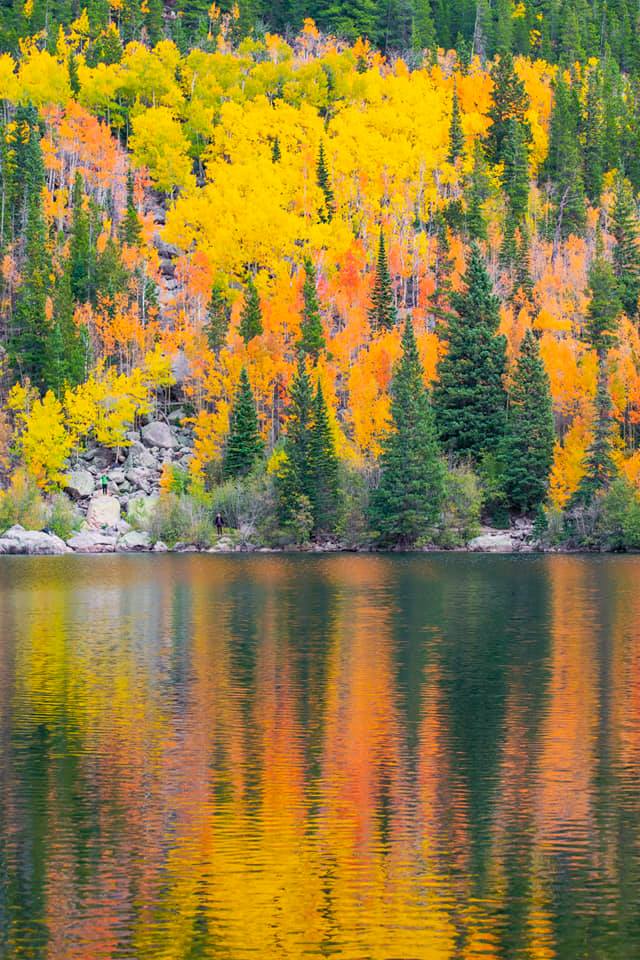
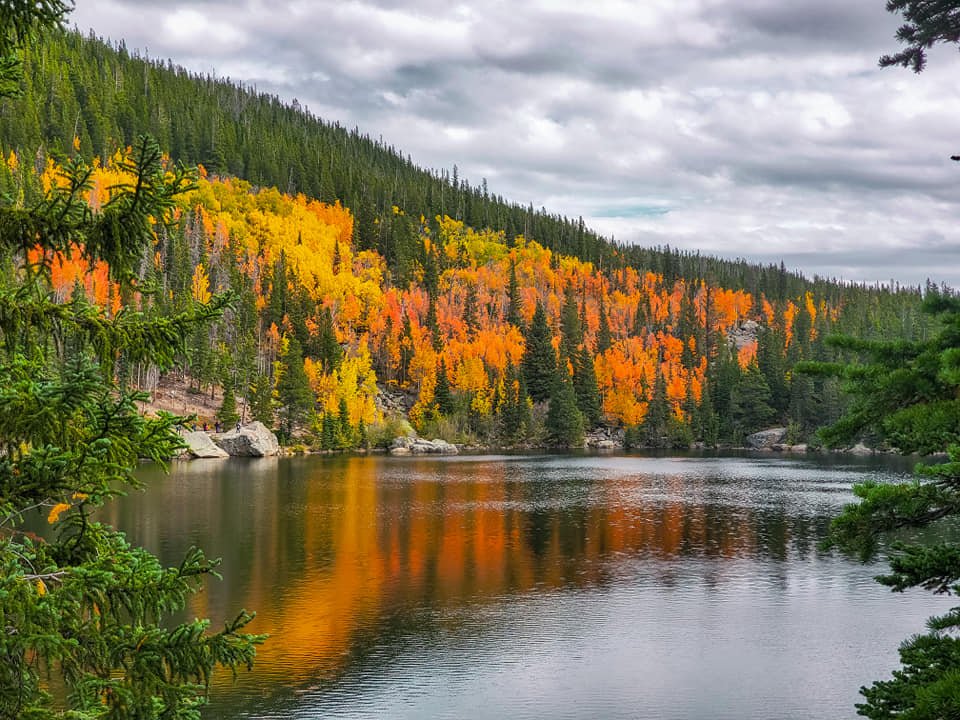
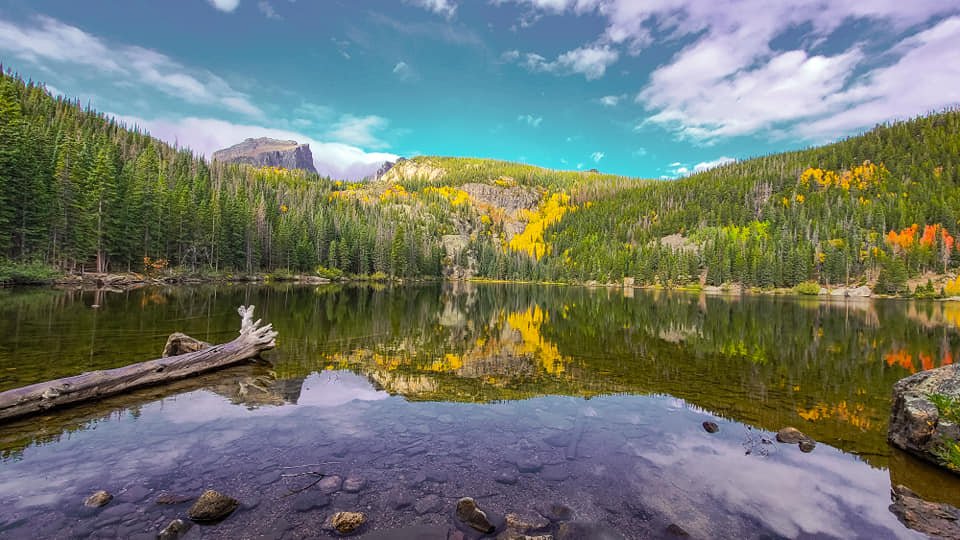
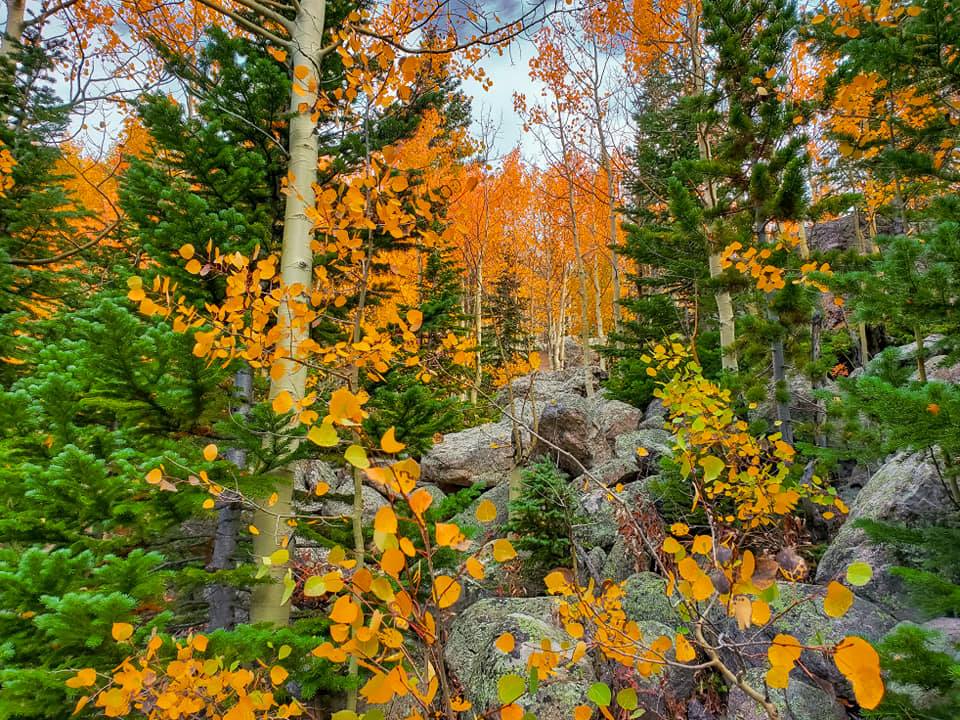
    Coinciding with the elk rut are the yellows, golds and oranges of changing leaves. Aspen trees, which occur on both sides of the park, offer the most brilliant colors. A walk through the autumn forests also reveals reds and golds of numerous understory plants. Autumn days are often splendid - crisp and clear with an occasional snowfall.

    Winter

    Winter begins early at Rocky Mountain's high elevations. By mid-November, the Kawuneeche Valley usually has enough snow for long, gentle cross-country ski tours and snowshoe treks.

    Favorite west side ski areas include the Bowen-Baker and Never Summer Ranch areas, which feature beginner-level routes. The Colorado River Trail and the East and North Inlet trails lead to intermediate and more-difficult terrain. Ample snowpack by mid-December allows 16 miles of road through the Kawuneeche Valley to open to snowmobiles, providing access to Milner Pass.

    East of the Continental Divide, snows accumulate later in the season, and they normally don't cover the lower elevations. By December, trails from the Bear Lake and Glacier Gorge Junction trailheads lead snowshoers and intermediate-to-advanced skiers to numerous frozen subalpine lakes. The Wild Basin and Glacier Basin areas have gentler terrain for beginner and intermediate cross-country skiers.

    For those not looking for snow, Rocky offers miles of east side hiking trails that surprisingly remain snow-free - or nearly so - year-round. Conditions change throughout the season, so be sure to check at a visitor center for the latest hiking, snow and avalanche conditions before starting out.

    Wildlife viewing is especially rewarding in the wintertime. The sights of a coyote hunting in a snow-covered meadow, of herds of elk with their breath condensing in the air or a cow and a calf moose silhouetted against the snow are unforgettable images.

    Spring

    Spring arrives at different times in the park, depending on elevation and slope. In the Kawuneeche Valley and Bear Lake areas, late-lying snow still pleases skiers and snowshoers. Meanwhile, lower-elevation areas are beginning to bud and bloom.

    Beginning in mid-March, look for nesting raptors on Lumpy Ridge as peregrine and prairie falcons, golden eagles, red-tailed hawks and ravens nest on the warm, sunny cliffs. Stroll Moraine Park to search for the season's first wildflowers, including blue, tulip-shaped pasqueflowers; little pink springbeauties; and yellow sage buttercups. All begin appearing in early April, when ground squirrels and marmots emerge from hibernation. Mountain bluebirds, which begin returning from their winter grounds in March, are brilliant in flight.

    As the spring season progresses, the melting snowline climbs higher into the mountains. Following soon are summer and summer's larger crowds. But those who visited the high country during the fall, winter and spring, Rocky Mountain's quiet seasons, know they and nature shared some very special times.


    Aspen Glory Myth, Wonder, and Science

    The Color Change

    Indian legend tells us when the Great Bear smelled the hunter's fire in fall, the ensuring fight splattered yellow cooking grease and red blood on the leaves of the aspen forest.

    The quaking aspen and its trembling leaves are still a source of wonder. The key to their fall hues lies not in myth, but in the natural environment.

    The color changes start first in the subalpine zone (9,000 - 11,000 feet elevation) in early September. Progressively, changes reach the montane zone (8,000 - 9,500 feet) by mid-month. Weather can dictate a good or poor year for color, and the fall display can last from days to weeks.

    Why the Vivid Colors?

    The Indians answered their questioning with an enduring tale. The scientific explanation is based on variations in temperature, moisture, and light. These factors set the internal chemical changes in motion.

    A close examination of the aspen buds in springtime reveals many hues hidden within the leaves. As the foliage matures, chlorophyll, the green pigment, carries on photosynthesis, converting sunshine into food and energy. In doing so, the chlorophyll dominates all other colors.

    The diminished light temperatures of fall trigger the break down of chlorophyll. As green colors fade, yellow, orange, and red pigments--carotenoids and xanthophylls--are unmasked.

    The radiant red to nearly blue color is produced by anthocyanin. This pigment appears when sugars are concentrated in the leaves. Ideal conditions of sunny days and cool nights produce the choicest spectrum.

    Lifecycle

    Quaking aspens (Populus tremuloides) provide beautiful scenery and a rich habitat for wildlife. Aspens, the most widely distributed tree in North America, are one of the few deciduous trees hearty enough to survive in a harsh mountain environment

    Aspen trees are short-lived, surviving about a 120 years. In mountain environments, the brief growing season often prevents Aspen seeds from germinating. Instead, an aspen's lateral roots produce vertical shoots, called suckers. Some suckers grow into mature trees, creating a large network of interconnected roots that can produce new trees for over a thousand years. These patches of genetically identical trees or "clones" will sprout new buds and change colors at the same time.

    Flourishing aspens provide shade for young spruce or fir trees. These conifers grow and eventually replace the aspen forests. Long after the visible portion of the Aspen tree is gone, the underground root system remains behind patiently waiting for a disturbance from fire, avalanches, or other occurrences that remove the conifer forest. If the sun's warmth touches the soil, it will stimulate the Aspen's dormant root system, starting another cycle of these pioneering species.

    Aspen Habitat

    Quietly sit in an Aspen grove, and watch the forest spring to life. High in the trees, woodpeckers hollow out cavity holes in the soft Aspen bark while looking for insects. Leftover holes soon become an apartment house for nesting sapsuckers, bluebirds, vireos, and other species.

    Fallen aspen leaves, plant matter, and feces collect on the forest floor, attracting insects and other invertebrates. Small leaf fragments and feces left behind are further decomposed by bacteria and fungi. The soil is enriched by mineral nutrients and decomposed organic material, producing a rich, diverse understory.

    Deer and elk seek rest, cover, and forage in the tall understory shrubs. Mothers hide their calves in brush while grazing and browsing nearby. Aspen bark provides an extra food source in winter for browsing elk.

    Suggested Aspen Viewing Areas
    Place Description
    Hidden Valley Aspens dominate the southeast facing hillside on Hwy. 34 (7 miles from park headquarters), just west of the Beaver Ponds Boardwalk.
    Bear Lake
    Road
    This is a very popular location for viewing color. Alberta Falls is a 1.2 mile round-trip hike abounding with fall sights and scents.
    Fern & Cub
    Lake Trails
    These trails in Moraine Park off the Bear Lake Road provide easy hiking and aspen viewing.
    Twin Sisters See the "Butterfly Burn" on the west slope of the peak 7 miles south of Estes Park on Colorado Hwy. 7.
    Longs Peak Travel south 8 miles on Colorado Hwy. 7, to see fall colors on the lower flanks of the peak.
    Wild Basin Drive to the Finch Lake Trailhead and hike for a distance of 1 1/2 miles one-way into the aspen forest.
    East Inlet Trail 3 mile one-way hike on this trail leads to spectacular fall color.
    Kawuneeche
    Valley
    Drive through more than ten miles of prime aspen country along TRAIL RIDGE Road. Start at Grand Lake and travel to just beyond the Timber Lake Trailhead.
    Farview Curve At 10,000 feet elevation, this overlook provides a good panorama of the Kawuneeche Valley and the Never Summer range.


    Snowmobiling

    Limited snowmobiling opportunities are available on the West Side of the Park, near Grand Lake. The few routes that are available provide access to spectacular scenery both in the park and on adjacent U.S. Forest Service lands. There are no snowmobile routes on the East Side of the Park.

    See the Hiking Page for more information on skiing and snowmobiling.


    Rocky Mountain National Park Travel Packets

    Rocky Mountain National Park Links
    Bullet Accessibility
    Bullet Activities and Calendar
    Bullet Address & Phone
    Bullet Artist in Resident
    Bullet Aspens
    Bullet Backcountry Camping
    Bullet Backpacking Information
    Bullet Be Bear Aware
    Bullet Biking Guide
    Bullet Brochures, Maps, Written Info
    Bullet Camping Guide
    Bullet Cougar Information
    Bullet Driving Rocky's Roads
    Bullet Entrance Fees
    Bullet Establishment
    Bullet Fishing Guide
    Bullet Hiker Randal W. Horobik
    Bullet Hiking Guide
    Bullet History
    Bullet Horseback Riding
    Bullet Horse and Pack Animals
    Bullet Jobs, SCA, Volunteer Positions
    Bullet Junior Ranger Programs
    Bullet Leave No Trace
    Bullet Location
    Bullet Lodging Guide
    Bullet Long's Peak
    Bullet Map Guide
    Bullet Mountain Climbing
    Bullet Native Peoples
    Bullet Park Information
    Bullet Permits
    Bullet Pet Information
    Bullet Road Tours
    Bullet Search
    Bullet Seasons
    Bullet Sights Guide
    Bullet Size and Visitation
    Bullet Skiing & Snowmobiling
    Bullet Trail Ridge Road
    Bullet Travel Guide
    Bullet Visitors Guide
    Bullet Weather
    Bullet Wildlife Watching

    Rocky Mountain National Park
    Colorado National Parks Page
    Colorado National Parks
    Back to National Parks
    Equip yourself for your next National Park adventure by visiting our Outdoor Gear and Equipment Store


    by John William Uhler

    Copyright © 1997 - 2004 Page Makers, LLC

    This site is in no way associated with the United States Government, the Department of the Interior or the National Park Service

    Demand Media Network

    Privacy Policy